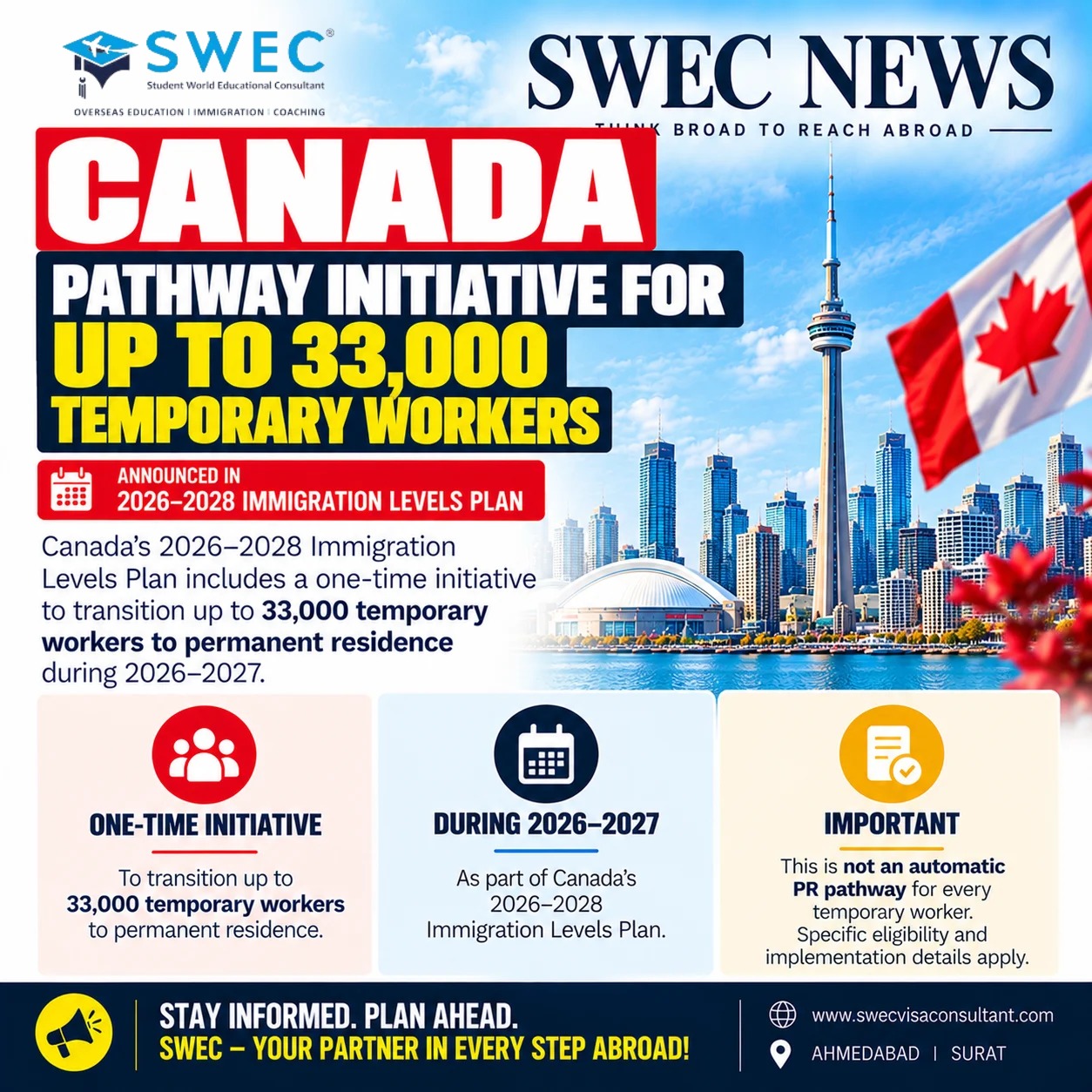
Canada plans to move up to 33,000 temporary workers to permanent residence (PR) in 2026 and 2027. The plan is called the In-Canada Workers Initiative.
The news has caused a lot of confusion. Many workers think a new PR program has opened. It has not.
Here is what the initiative does, who benefits and what you should do if you are not covered.
What Is the In-Canada Workers Initiative?
It is a one-time measure first announced in Canada’s Budget 2025. Immigration, Refugees and Citizenship Canada (IRCC) shared an update on 4 May 2026.
Under the initiative, IRCC is speeding up PR decisions for certain work permit holders who have already applied for PR. It focuses on workers living in smaller and rural communities with labour shortages.
Immigration Minister Lena Metlege Diab said the initiative aims to “promote economic growth and address labour shortages in key sectors where they are most needed.”
Key Facts at a Glance
| Detail | What we know |
|---|---|
| Name | In-Canada Workers Initiative |
| Type | One-time acceleration of existing PR applications |
| Total workers | Up to 33,000 |
| Timeline | 2026 and 2027 |
| 2026 goal | At least 20,000 new PRs |
| New application | Not required |
| Counted in levels plan? | No, it is in addition to the 2026 to 2028 targets |
| Progress updates | Published monthly by IRCC |
Who Is Eligible?
According to IRCC, eligible workers must meet both of these conditions.
1. They have already applied for PR through one of these programs:
- Provincial Nominee Program (PNP)
- Atlantic Immigration Program (AIP)
- Community immigration pilots, including the Rural Community Immigration Pilot and the Francophone Community Immigration Pilot
- Caregiver pilots
- Agri-Food Pilot
2. They have lived in a smaller community in Canada for 2 years or more.
IRCC has not published a full list of qualifying communities or a population limit. Do not assume your town qualifies without checking official guidance.
IRCC briefing material also says the initiative is not meant for undocumented or out-of-status people.
This Is Not a New PR Pathway
This is the most important point.
- There is no new application form.
- There is no open intake.
- A work permit alone does not make you eligible.
IRCC finds eligible files in its existing PR inventory and processes them faster. Applicants do not need to do anything extra.
So if you have not applied for PR through one of the listed programs, this initiative will not help you right now.
How Many Workers Have Received PR So Far?
IRCC tracks progress monthly.
- January to February 2026: About 3,600 workers received PR, according to reports of IRCC’s figures.
- January to July 2026: About 13,000 workers received PR, according to Jain Immigration Law. That is about 65% of the 2026 goal.
These admissions are in addition to Canada’s regular PR targets, so they don’t take spots from other programs.
Why Canada Is Doing This
Canada is cutting its temporary population, with a goal of bringing it below 5% by the end of 2027. At the same time, smaller communities still need workers.
This initiative meets both goals. Workers who already live in rural areas move to PR, so they stay in those communities. It also helps reduce the PR backlog.
What This Means for Indian Workers in Canada
Indian nationals make up a large share of work permit holders in Canada. Here’s how the initiative may affect you.
If you have already applied through a listed program and live in a smaller community:
- You don’t need to take action
- Keep your contact details and documents up to date in your IRCC account
- Answer any IRCC request quickly
If you have not applied for PR yet:
- This initiative will not cover you
- Check whether you qualify for a PNP, the Atlantic Immigration Program or a community pilot
- Consider Express Entry, especially with the new CRS points for high-wage occupations from 3 November 2026
If you live in a large city:
- Your PR application will still be processed normally, but it may not be sped up under this initiative
Beware of Scams
Some agents may advertise this as a new “33,000 PR scheme.” Be careful.
- There is no fee to join the initiative
- There is no separate application
- Nobody can “register” you for it
If someone asks you to pay to apply, walk away. Always check information on the official IRCC website.
What You Should Do Now
- Check your current PR application. Note which program you applied under.
- Count your time in a smaller community. The rule is 2 years or more.
- Keep your status valid. Renew your work permit on time.
- Watch IRCC’s monthly updates for progress.
- Plan your PR route if you haven’t applied yet. Compare PNPs, regional pilots and Express Entry.
- Get advice only from registered professionals.
Get Help Planning Your Canada PR
This initiative helps people already in the system, but many workers still need a clear PR plan. SWEC Visa Consultant helps clients from Ahmedabad, Surat and across Gujarat with:
- Canada PR eligibility checks
- Provincial Nominee Program guidance
- Express Entry profile support
- Document review and application filing
Book a consultation with SWEC to find your best route to Canadian PR.
Sources
- IRCC: Filling labour gaps in smaller communities by accelerating permanent residence for 33,000 workers
- IRCC: Key numbers on student and temporary worker numbers in Canada
- Jain Immigration Law: Canada’s 33,000-Worker Permanent Residence Initiative
- LinkedIn: Canada’s 33,000 Worker Initiative: Acceleration, Not a New Pathway