Table of Contents
Overview Of Studying In Canada
Studying in Canada offers a wealth of benefits and opportunities for Indian students. Canada is renowned for its high-quality education system, multicultural environment, and excellent living standards. With world-class universities and colleges, Canada provides diverse courses and programs that cater to various fields of study. Additionally, Canadian institutions are known for their research facilities and innovative teaching methods, which ensure that students receive a comprehensive education that equips them with the skills needed for their future careers.
Importance Of Proper Documentation
Having the correct documentation is crucial when applying for a Canada student visa. Proper documentation ensures a smooth application process and increases the chances of visa approval. Missing or incorrect documents can lead to delays or even rejection of the visa application. Therefore, it is essential to gather and organize all required documents meticulously to present a strong and complete application to the visa authorities.
Purpose Of The Blog
The purpose of this blog is to provide a detailed and informative guide on the essential documents needed for a Canada student visa. This guide aims to help prospective Indian students understand the documentation requirements and prepare their applications effectively. By following the information provided in this blog, students can ensure that they have all the necessary documents in place, thereby enhancing their chances of successfully obtaining a Canada student visa.
What Is A Canada Student Visa?
A Canada Student Visa, commonly known as a Study Permit, is an official document issued by the Canadian government that allows international students to study at designated learning institutions (DLIs) in Canada. This permit is essential for Indian students who wish to pursue their education in Canada for programs longer than six months. The Study Permit not only grants the legal right to study in Canada but also often includes permission to work part-time during the academic session and full-time during scheduled breaks, thereby helping students support themselves financially while studying.
Types Of Canadian Student Visas
When considering studying in Canada, it’s important to understand the different types of student visas available. Here are the main categories:
1. Study Permit:
This is the primary visa for international students enrolled in programs longer than six months. It allows students to live and study in Canada for the duration of their course. The Study Permit also often includes conditions related to part-time work and other privileges.
2. Temporary Resident Visa (TRV):
Depending on your country of citizenship, you may also need a Temporary Resident Visa or an Electronic Travel Authorization (eTA) to enter Canada. The TRV is an entry document that allows you to enter and stay in Canada temporarily. Indian students usually require a TRV along with their Study Permit.
Understanding these visa types is crucial as it helps ensure that students apply for the correct permits and comply with all necessary regulations. This knowledge can prevent potential issues during the application process and once students arrive in Canada.
Pre-application Checklist
Eligibility Criteria
Before applying for a Canada Student Visa, it’s essential to ensure you meet the eligibility criteria set by the Canadian government. Here are the key requirements:
- Age: Generally, there is no specific age limit for applying for a student visa. However, the applicant must be of legal age in their home country and able to demonstrate their capability to succeed in their chosen program.
- Academic Qualifications: Applicants must have completed the necessary academic qualifications to be admitted to the Canadian institution of their choice. This typically includes transcripts and certificates from previous educational institutions. Ensure your academic background aligns with the program’s requirements at the Canadian institution.
- Language Proficiency: Proficiency in English or French is required, depending on the language of instruction at the Canadian institution. Most students will need to provide proof of language proficiency through tests like IELTS (International English Language Testing System), TOEFL (Test of English as a Foreign Language), or equivalent for English, and TEF (Test d’Évaluation de Français) for French.
- Financial Stability: You must show proof of sufficient funds to cover tuition fees, living expenses, and return travel. This can include bank statements, affidavits of support, or proof of scholarships.
Choosing the Right Institution
Selecting the right educational institution is crucial for a successful study experience in Canada. Here’s how to make the right choice:
- Designated Learning Institutions (DLIs): Ensure that the institution you choose is a Designated Learning Institution (DLI). Only DLIs are authorized by the Canadian government to admit international students. Check the DLI list on the official Canadian immigration website to confirm that your chosen institution is listed.
- Program and Location: Consider factors such as the program’s curriculum, faculty, and career prospects. Additionally, research the location of the institution—different cities in Canada offer various living conditions, climates, and opportunities.
Applying for Acceptance
The process of applying for and gaining acceptance into a Canadian institution involves several key steps:
- Research and Shortlisting: Research potential institutions and programs that align with your academic and career goals. Shortlist institutions based on your preferences, such as location, program quality, and cost.
- Application: Complete the application process for the chosen institution. This typically includes submitting an online application form, academic transcripts, language proficiency test scores, and letters of recommendation. Be mindful of application deadlines and specific requirements of each institution.
- Acceptance Letter: Upon successful acceptance, the institution will issue an acceptance letter. This letter is crucial as it will be required for your student visa application. Ensure the acceptance letter includes important details such as your program of study, duration, and the institution’s DLI number.
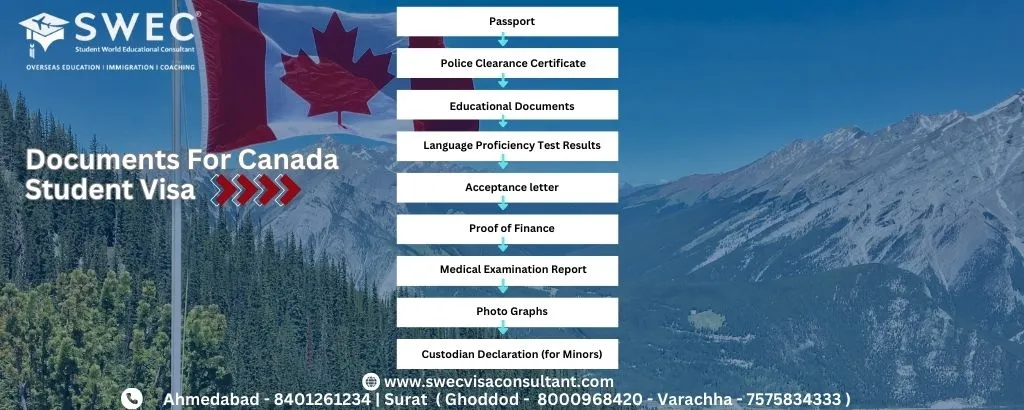
Essential Documents Required For Canadian Student Visa
1. Acceptance Letter
- Issued by a DLI: Your acceptance letter must come from a Designated Learning Institution (DLI) in Canada. This letter confirms that you have been admitted to a recognized educational institution and provides details about your program of study.
- Details and Significance: The acceptance letter should include essential information such as the name of the institution, the program you will be studying, the start and end dates of the program, and the institution’s DLI number. This document is crucial as it serves as proof of your enrollment and is a primary requirement for your student visa application.
2. Valid Passport
- Passport Validity Requirements: Your passport must be valid for the duration of your stay in Canada. Ideally, it should be valid for at least six months beyond the date you plan to enter Canada.
- Importance of Having a Passport: A valid passport is essential for international travel and is required to apply for a student visa. It serves as your primary identification document and must be valid to ensure smooth entry into Canada.
3. Proof of Financial Support
- Bank Statements: Provide recent bank statements to show that you have sufficient funds to cover tuition fees, living expenses, and return travel. Typically, statements from the last three to six months are required.
- Proof of Scholarships or Student Loans: If you have received a scholarship or student loan, include official documents verifying the amount and terms of the financial aid.
- Affidavit of Support: If someone else is sponsoring your education, you’ll need an affidavit of support. This is a legal document from your sponsor affirming their commitment to financially support you during your studies.
4. Photographs
- Passport-Sized Photographs: You need to submit recent passport-sized photographs as part of your application.
- Photo Specifications: Ensure that the photographs meet the specific requirements set by the Canadian authorities, such as size, background colour, and facial expression. Generally, the photographs should be clear, in colour, and taken against a plain background.
5. Study Plan
- Explanation of the Study Plan: A study plan is a detailed statement outlining your educational goals, why you chose your particular program, and how it fits into your future career plans.
- Importance and Tips for Writing an Effective Study Plan: This document helps demonstrate your seriousness about studying in Canada and provides context for your academic objectives. Ensure it is well-organized, addresses your educational background, and clearly explains why you are choosing Canada as your study destination.
6. Language Proficiency Test Results
- IELTS, TOEFL, or Other Accepted Tests: You must provide results from a recognized language proficiency test. Common tests include IELTS (International English Language Testing System) or TOEFL (Test of English as a Foreign Language).
- Minimum Score Requirements: Different institutions have varying minimum score requirements. Check the specific requirements for your chosen institution and ensure your scores meet or exceed these benchmarks.
7. Educational Documents
- Transcripts and Certificates: Submit transcripts from all previously attended educational institutions, including high school and any post-secondary education. Include certificates and diplomas as well.
- Previous Degrees or Diplomas: Provide proof of any previous degrees or diplomas that are relevant to your application. These documents should be translated into English or French if originally in another language.
8. Medical Examination Report
- Approved Medical Practitioners: A medical examination report must be conducted by an approved panel physician. Ensure that the physician is authorized by the Canadian immigration authorities.
- Health Requirements and Process: The medical examination assesses your health status to ensure you meet the health requirements for entry into Canada. Follow the instructions provided by the Canadian immigration authorities regarding the process.
9. Police Clearance Certificate
- How to Obtain It: Obtain a police clearance certificate from your local police authorities or other relevant agencies. This document verifies that you have no criminal record.
- Importance of Background Check: A police clearance certificate is crucial for ensuring that you have a clean background. It is used to assess your suitability for a student visa.
10. Custodian Declaration (for Minors)
- Legal Requirements: If you are a minor (under 18 years of age), you must provide a custodian declaration. This legal document designates a responsible adult in Canada who will act as your guardian.
- How to Prepare and Submit the Declaration: The custodian declaration must be signed by both you and your custodian in Canada. Ensure that all legal requirements are met and submit the declaration along with your other visa application documents.
Additional Documents That May Be Required
1. Proof of Ties to Home Country
- Documents Proving Intent to Return Home: Provide documents that demonstrate your intent to return to your home country after completing your studies. This could include property ownership documents, family ties, or a letter from your future employer.
2. Travel History
- Previous Visas and Travel Documents: Include copies of any previous visas and travel documents to show your travel history. This helps establish your credibility as a visitor to Canada.
3. Work Experience
- Certificates and Reference Letters: If applicable, include certificates of previous employment or reference letters from past employers. This can be relevant if your work experience supports your study program.
4. Visa Application Form
- Detailed Guide on Filling Out the Form: Complete the student visa application form accurately. Follow the instructions carefully and ensure that all sections are filled out correctly to avoid delays.
5. Biometrics
- Process and Requirements: Some applicants may need to provide biometric information, such as fingerprints and a photo. Check the requirements for biometrics and follow the instructions provided by the Canadian immigration authorities.
Steps To Apply For The Canada Student Visa
Step 1. Gather Required Documents:
Begin by collecting all the essential documents required for the student visa application. This includes your acceptance letter, valid passport, proof of financial support, photographs, study plan, language proficiency test results, educational documents, medical examination report, police clearance certificate, and custodian declaration if applicable.
Step 2. Complete the Application Form:
Fill out the student visa application form accurately. You can download the form from the official Canadian immigration website. Ensure all sections are completed and that you provide truthful information. Double-check your form for errors before submission.
Step 3. Prepare Supporting Documents:
Organize your supporting documents according to the checklist provided by Canadian immigration authorities. Ensure that all documents are complete, correctly formatted, and translated into English or French if necessary.
Step 4. Pay the Application Fees:
Pay the required application fees. This includes the processing fee and, if applicable, biometric fees. Payment can typically be made online through the official Canadian immigration website.
Step 5. Submit Your Application:
Choose your preferred submission method—online or offline. If applying online, create an account on the Canadian immigration website, upload your completed application form and supporting documents, and submit them electronically. For offline submission, print out your completed application form, gather all your documents, and send them to the designated visa office or application centre.
Step 6. Attend a Biometrics Appointment:
If required, schedule and attend a biometrics appointment. Biometrics include fingerprinting and photographing, which are used for identity verification.
Step 7. Await Processing:
After submission, monitor the status of your application. Processing times can vary based on the volume of applications and other factors. You will receive updates regarding your application status through the email or online portal used during submission.
Step 8. Attend an Interview (If Required):
In some cases, you might be requested to attend an interview as part of the visa application process. Prepare for the interview by reviewing your application and supporting documents.
Step 9. Receive Your Decision:
Once your application is processed, you will receive a decision. If approved, you will be issued a study permit that allows you to study in Canada. If refused, you will receive a notice explaining the reasons for the refusal.
Application Fees for a Canada Student Visa
- Breakdown of Fees: The application fees for a Canada Student Visa include the processing fee and, if applicable, the biometric fee. As of now, the standard processing fee is CAD 150. The biometric fee is CAD 85 per person or CAD 170 for a family applying together.
- Payment Methods: Payment for application fees can be made online through the official Canadian immigration website using a credit card. Ensure to keep a copy of the payment receipt, as you may need to provide proof of payment with your application.
Where to Submit Your Application
- Online Submission: Submitting your application online is often the most efficient method. Create an account on the Canadian immigration website, complete the application form electronically, upload your supporting documents, and submit them through the online portal. This method allows for quicker processing and easier tracking of your application status.
- Offline Submission: If you prefer or are required to submit your application offline, print out the completed application form and gather all your documents. Send the physical application package to the appropriate visa office or application centre. The address for submission will be provided by Canadian immigration authorities based on your location.
- Visa Application Centers (VACs): In many countries, you can submit your application through a Visa Application Center (VAC). VACs assist with the submission of applications and biometric collection. Check the nearest VAC location and their specific procedures for submitting your student visa application.
Common Mistakes To Avoid In Canadian Student Visa
1. Incomplete Documentation
One of the most common reasons for delays or refusals in Canadian student visa applications is incomplete documentation. Ensuring that you submit all required documents is crucial for a smooth application process. Here’s how to avoid this mistake:
- Checklist Review: Carefully review the checklist provided by Canadian immigration authorities to ensure that you include all necessary documents. Common documents include the acceptance letter, passport, proof of financial support, photographs, and more.
- Double-Check Requirements: Verify that each document meets the specified requirements, such as format, validity, and translations. For instance, bank statements should be recent and in the required format.
- Documentation Order: Organize your documents according to the guidelines provided. Missing or incorrectly ordered documents can lead to delays or even rejection.
2. Incorrect Information
Submitting incorrect information on your application form or supporting documents can lead to significant issues, including application refusal or delays. To prevent errors:
- Accuracy: Ensure that all information provided on the application form is accurate and matches the details on your supporting documents. This includes personal details, educational background, and financial information.
- Cross-Verification: Double-check your application and documents for any discrepancies before submission. Even small errors can cause problems or result in a request for additional information.
- Professional Assistance: If you’re unsure about filling out the forms or interpreting the requirements, consider seeking help from a visa consultant or legal expert who can assist with ensuring that your application is error-free.
3. Missing Deadlines
Meeting deadlines is essential for a successful student visa application. Missing deadlines can result in processing delays or even a refused application. Here’s how to stay on top of important dates:
- Track Key Dates: Keep a detailed record of all important dates, including the application submission deadline, biometric appointment, and any additional document submission dates. Setting reminders can help ensure you don’t miss these deadlines.
- Application Processing Time: Be aware of the average processing times for student visas, and submit your application well in advance of your intended start date to accommodate any delays.
- Follow-Up: After submission, regularly check the status of your application and respond promptly to any requests for additional information or documentation from Canadian immigration authorities.
Tips For A Successful Application
1. Organizing Your Documents
Proper organization and presentation of your documents can greatly enhance the effectiveness of your Canada student visa application. Here’s how to ensure your documents are well-organized:
- Create a Checklist: Start by creating a comprehensive checklist of all required documents based on the guidelines provided by Canadian immigration authorities. This will help you ensure that you have everything needed.
- Use Dividers and Folders: Organize your documents into sections using dividers or folders. For example, keep all educational documents together, financial proof in another section, and personal identification documents in a separate folder.
- Order of Submission: Arrange your documents in the order specified by the application guidelines. This typically includes placing the application form at the front, followed by supporting documents in the required sequence.
- Label Documents: Clearly label each document or section with a brief description to make it easier for the visa officer to review your application. This can help avoid confusion and ensure that all required documents are easily accessible.
2. Double-Checking Requirements
Ensuring that all document requirements are met is critical for a successful visa application. Follow these steps to double-check your requirements:
- Review Official Guidelines: Carefully review the official guidelines provided by Canadian immigration authorities to confirm you have met all document requirements. This includes checking specific format requirements, such as document translations or notarizations.
- Cross-Verify Information: Compare the information on your documents with the details on your application form. Ensure that all information is accurate and consistent across all documents.
- Regular Updates: Immigration requirements can change, so regularly check for any updates or changes in the document requirements or visa application process. Make sure you’re using the most current information.
3. Seeking Professional Help
Consulting with SWEC Visa and Immigration consultants can be beneficial, especially if you’re unfamiliar with the application process. Here’s how to approach seeking professional help:
- When to Consult: Consider consulting a SWEC Visa and Immigration consultants if you have complex cases, such as previous visa refusals, or unusual documentation requirements, or if you need assistance with understanding the application process.
- Choosing a Professional: Look for experienced and reputable visa consultants like SWEC with a track record of successful student visa applications. Verify their credentials and client reviews to ensure you’re getting reliable advice.
- Services Offered: SWEC’s Professional help can include document review, application form assistance, guidance on meeting requirements, and handling any issues that arise during the application process. They can provide valuable insights and help streamline your application.
What To Do After After Submission?
1. Tracking Your Application
Once you’ve submitted your Canada student visa application, staying informed about its status is crucial. Here’s how you can effectively track your application:
- Online Tracking: Most Canadian visa applications can be tracked online through the Immigration, Refugees and Citizenship Canada (IRCC) website or the specific visa application centre’s portal. You will need your application reference number to access the status.
- Email Notifications: IRCC often sends email updates regarding the status of your application. Make sure to regularly check your email and spam folder for any notifications.
- Visa Application Center (VAC): If you applied through a Visa Application Center, you can track your application status through their tracking system or contact the VAC for updates.
- Processing Times: Be aware of the average processing times for student visas to have realistic expectations. Processing times can vary based on the volume of applications and your specific circumstances.
2. Preparing for the Visa Interview
If your application requires an interview, being well-prepared can make a significant difference. Here’s how to get ready:
- Common Questions: Be prepared to answer questions about your academic background, reasons for studying in Canada, your choice of institution, and your plans. The interviewer may also ask about your financial situation and ties to your home country.
- Interview Tips: Practice clear and concise answers. Be honest and provide detailed explanations when required. Dress professionally and arrive on time for your interview. Make sure you have all necessary documents organized and readily available.
- Documentation: Bring all original documents and copies that support your application, including your acceptance letter, proof of financial support, and any other documents requested by the visa office.
3. What to Do if Your Visa is Approved
Congratulations on receiving your student visa! Here are the next steps you should take:
- Review Your Visa: Check the details on your visa carefully to ensure there are no errors in your personal information or visa conditions. Verify the start and end dates, as well as any restrictions or conditions attached to your visa.
- Plan Your Travel: Make travel arrangements to Canada, including booking flights and accommodation. Ensure you arrive in Canada before your study program begins and comply with any entry requirements.
- Prepare for Arrival: Familiarize yourself with Canadian customs and regulations, and prepare for your orientation at the educational institution. This includes understanding health insurance requirements, opening a bank account, and any other essential preparations.
4. What to Do if Your Visa is Denied
If your visa application is denied, it’s important to understand the reasons and how to address them:
- Understand the Reasons: Carefully review the denial letter to understand the reasons for the rejection. Common reasons include incomplete documentation, insufficient financial proof, or discrepancies in your application.
- Reapply: If possible, address the issues mentioned in the denial letter and reapply. Ensure that you provide all requested documents and correct any errors. Seek advice from a visa consultant or immigration lawyer to improve your chances in the subsequent application.
- Appeal Process: Depending on the reason for denial, you may have the option to appeal the decision. Follow the instructions provided in the denial letter for the appeal process. Provide additional evidence or documentation as required.
Frequently Asked Questions About Documents Required For Canada Student Visa
What documents are needed for a Canada student visa?
You need a valid passport, letter of acceptance from a Canadian institution, proof of financial support, passport-size photos, and academic records. Additional documents like medical exams and police certificates may be required depending on your country.
Do I need a Letter of Acceptance for a Canada student visa?
Yes, a Letter of Acceptance from a recognized Canadian institution is mandatory for your study permit application. It confirms your enrollment and study plan.
How much financial proof do I need for a Canada student visa?
You must show enough funds to cover tuition fees for your entire course, living expenses, and return travel costs. The exact amount depends on your province and course duration.
Are medical and police certificates required?
Medical exams and police clearance certificates may be required depending on your country of residence and personal circumstances. Check the requirements based on your specific situation.
Do I need English language test results?
If required by your institution, you may need to submit IELTS, TOEFL, or another approved English language test result. Some institutions may waive this requirement.
Can missing documents cause visa refusal?
Yes, incomplete or missing documents can delay your application or lead to refusal. Always submit a complete file with all required documents to avoid complications.
Conclusion
In this blog, we’ve covered the essential documents needed for a successful Canada student visa application. From securing your acceptance letter from a Designated Learning Institution (DLI) to preparing a detailed study plan, each document plays a crucial role in strengthening your application. We’ve also highlighted the importance of a valid passport, proof of financial support, language proficiency test results, and other vital documents like medical examination reports and police clearance certificates. Ensuring you have all these documents correctly prepared and submitted is critical to a smooth visa application process.
Ready to start your application for a Canada student visa? Take the first step by gathering all the necessary documents and following the guidelines provided in this blog. If you find yourself needing assistance or have any questions, don’t hesitate to reach out to our team at SWEC Visa. Our expert Canadian Student Visa consultants are here to guide you through every step of the process, ensuring a smooth and successful application. Begin your journey with confidence and let us help you turn your dreams into reality!