Key Takeaways
- Canada will issue 408,000 study permits in 2026 — only 155,000 are for new students arriving from outside Canada
- Master’s and PhD students at public universities no longer need a PAL/TAL from January 2026, removing them from the capped pool entirely
- The PGWP eligible fields of study list is frozen for 2026 — no new programs added, no removals, so course choice is final
- Language requirement for PGWP: CLB 7 for degree graduates (roughly IELTS 6.0 in each band), CLB 5 for diploma graduates
- Choosing a PGWP-eligible program at a public DLI is now the single most important decision — more important than which city or college you choose
We hear the same worry almost every day. Parents ask if Canada is becoming too hard. Students ask if a course still leads to work after graduation. In moments like this, speaking early with a Canada student visa consultant can stop a costly mistake before it starts.
This guide is for Indian students and parents, especially those planning 2026 intakes with a lot of questions and not enough clear answers. We’ll keep it simple, practical, and honest. By the end, you will know exactly what has changed and how to move forward.
Why Indian Students Still Choose Canada In 2026
Canada is not closing its doors to Indian students. In fact, over 427,000 Indian students were studying in Canada in 2025, making it the top destination for Indian talent globally. That number tells a real story.
The appeal is simple and honest. Canada offers English-medium education with globally recognised degrees. But more important than the degree itself is what comes after. The PGWP → Express Entry → Permanent Residency pathway is cleaner in Canada than almost anywhere else. No other country ties work experience, points, and PR together as clearly.
During studies, students can work up to 24 hours per week, which helps with living costs and builds Canadian work history early. And starting January 2026, master’s and PhD students at public universities bypass PAL requirements entirely. That is a real win for graduate-level applicants.
Canada’s government also actively recruits. The International Talent Attraction Strategy specifically targets Indian researchers and graduate students, signalling that Indian talent is genuinely valued, not just tolerated.
What Has Actually Changed In 2026
The big picture is not that Canada has closed the door. The door is still open, but it is narrower in some categories.
First, the IRCC study permit cap for 2026 is lower. Canada plans up to 408,000 study permits, but only 155,000 of those are for new students outside Canada. That changes how early we need to plan.
Second, from January 2026, master’s and PhD students at public DLIs are exempt from PAL/TAL Canada 2026 rules. They do not need a provincial or territorial attestation letter, and they are outside the capped pool that affects many other applicants.
Third, course choice matters more because PGWP eligibility 2026 is still tight. The field list for affected non-degree programs has not changed this year, so we can’t assume a diploma will lead to a post-graduation work permit Canada option.
Here’s the quick comparison:
| What changed | What stayed the same |
| Lower 2026 cap for study permits | Public DLI status still matters |
| Public university master’s and PhD exemption from PAL/TAL | Financial proof still needs to be strong |
| PGWP field list unchanged through 2026 | Weak course choice still creates visa risk |
The short version is calming once we see it clearly. The rules are stricter, but they are still manageable with the right plan.
New Canada Rules 2026 And Their Effects On Indian Students
The 2026 rulebook is tighter, but the changes are not random. Each one has a direct effect on how Indian students should plan. Let’s break down what actually matters.
Study Permit Cap — Fewer Spots, Higher Competition
Canada will issue 408,000 total study permits in 2026. That sounds large until we look closer.
Only 155,000 of those are for newly arriving international students. Compare that to the peak of 485,000 new permits issued in 2024, and the shift is real. The remaining 253,000 are extensions for students already studying in Canada, so they are not new seats.
What does this mean in practice? The “apply and see” approach is dead. When only 155,000 new slots exist globally and Canada is attracting students from every continent, timing matters. For Indian students, especially those applying to high-demand provinces, the window to secure a spot is narrower. A delayed application in September can miss the intake entirely, while the same application in July might succeed.
One thing many students do not realise is how much the officer reviewing your file matters. IRCC has clarified how officers apply study permit cap rules in 2026 — and the guidelines make it clear that incomplete files, weak financial proof, or unclear study intent are the fastest ways to get filtered out when cap space is limited. Knowing this changes how you prepare your application.
This is why early planning with a Canada student visa consultant changes outcomes. The math is simple: fewer spots mean every file has to be stronger.
PAL/TAL Changes — Good News for Master’s and PhD Applicants
This is the biggest rule shift, and it creates two very different paths.
From January 1, 2026, Master’s and PhD students at public DLIs no longer need a Provincial Attestation Letter (PAL) or Territorial Attestation Letter (TAL). This removes them from the capped pool entirely. They apply directly to IRCC without provincial gatekeeping. For graduate students, this is a genuine relief.
Even better, PhD students get 14-day fast-track processing starting January 2026. That is a concrete speed advantage.
But here is the honest part: undergraduate and diploma students still need PAL approval. And competition for PAL slots in Ontario and British Columbia remains intense. A student applying for a bachelor’s degree in Toronto faces longer waits and tighter provincial caps than a master’s student applying anywhere in Canada.
| Student Type | PAL/TAL Required? | Processing Speed |
| Undergraduate / Diploma | Yes | Standard 4–8 weeks |
| Master’s at public DLI | No (from Jan 2026) | Standard 4–8 weeks |
| PhD at public DLI | No (from Jan 2026) | Fast-track 14 days |
| K–12 Students | No | Standard |
| Extending at same DLI | No | Standard |
If you are applying for a public university master’s or PhD, that exemption is a major advantage. If you are applying for a diploma or bachelor’s, early planning matters much more.
Which provinces are likely to be most competitive for Indian students
Ontario and British Columbia are usually the tightest because demand stays highest. Alberta can also get competitive. Quebec has its own language and process considerations. Meanwhile, some Prairie and Atlantic options may offer more room and less crowding.

Our practical tip is simple: don’t choose a province only for name value. A good-fit province with a stronger pathway is often better than a famous one with heavy PAL pressure.
Cost Breakdown For Indian Students — Canada 2026
Before you apply, know exactly what you are spending. Here is a realistic cost breakdown for Indian students going to Canada in 2026.
One-Time Application and Exam Costs
| Cost Item | Amount (approx.) |
| IRCC Study Permit Fee | CAD 150 |
| Biometric Fee | CAD 85 |
| Guaranteed Investment Certificate (GIC) | CAD 10,000 |
| IELTS / PTE Exam Fee | ₹16,000 – ₹18,000 |
| SOP / Document Preparation | Varies by consultant |
| Subtotal (before tuition) | CAD 10,235+ |
Annual Living and Study Costs
| Expense Category | Estimated Annual Cost |
| Tuition Fees (UG/PG) | CAD 15,000 – CAD 35,000 |
| Accommodation | CAD 8,000 – CAD 14,000 |
| Food & Groceries | CAD 3,000 – CAD 5,000 |
| Transport | CAD 1,200 – CAD 2,000 |
| Health Insurance | CAD 600 – CAD 900 |
| Miscellaneous | CAD 1,500 – CAD 2,500 |
| Estimated Total Per Year | CAD 29,000 – CAD 59,000 |
Ways to Reduce Your Cost
Part-time work during studies can offset a significant portion. Students working up to 24 hours per week typically earn CAD 800 to CAD 1,200 per month, which covers rent or food costs.
Master’s and PhD students often qualify for funded positions, teaching assistantships (TAships), or research assistantships (RAships) that reduce or eliminate tuition entirely. This is one of the biggest cost advantages for graduate students.
Scholarships from Canadian universities are available to international students, though they are competitive. Many institutions offer entrance scholarships, merit-based awards, or need-based funding. During counselling, we help identify these opportunities early so you can apply alongside your study permit.
Important note: INR to CAD conversion rates fluctuate daily. Always confirm current exchange rates before finalizing your budget. What costs CAD 30,000 today might cost slightly more or less in six months.
The costs are real and significant. Planning them in advance with the help of an experienced Canada student visa consultant means no surprises after you land. Many families underestimate living expenses or overestimate scholarship chances. Smart planning prevents both mistakes.
PGWP Changes In 2026, The Part That Can Shape Your Future In Canada
For many families, this section matters most because course choice now affects work rights after study.
What the PGWP is, and why Indian students care so much about it
The PGWP is a work permit many international graduates can get after finishing eligible studies in Canada. It lets graduates work in Canada legally after college or university. That work experience often supports a future Canada PR pathway for students.
So when we talk about studying smart, we are really talking about protecting the years after graduation too. The official page for Post-Graduation Work Permit eligibility should always be checked before fees are paid.

PGWP Field of Study — Frozen List, But Hidden Traps
IRCC confirmed the PGWP-eligible fields of study list will remain unchanged in 2026. On the surface, that sounds reassuring. No new programs were added, but also none were removed.
Business diplomas at the college level are a classic trap. Many look legitimate and promise good job prospects. Yet they are no longer PGWP eligible. Private college programs, even those with flashy partnerships or “university pathway” labels, are largely ineligible. A student can enrol, pay tuition, graduate, and discover they have no legal right to work in Canada afterward.
Safe fields remain healthcare, STEM, engineering technology, trades, agriculture, education, and transport. These appear consistently on the eligible list.
Here is the real effect: course selection is now the most important visa decision an Indian student makes. It is more important than which city you choose, more important than which college has the nicer campus. A wrong course choice can undo an entire visa approval.
Here is the quick duration guide:
| Program level | Typical PGWP duration |
| Master’s, minimum 8 months | Up to 3 years |
| PhD | Up to 3 years |
| Bachelor’s, 2 years or more | Up to 3 years |
| Diploma, 8 months to less than 2 years | Usually same length as program |
How to Confirm Your Program Is PGWP Eligible
Do not assume your course leads to a work permit. Even if the college website says “PGWP eligible,” verify it yourself. Here is how.
Step 1: Ask your institution for the 6-digit CIP code.
Every Canadian program has a Classification of Instructional Programs (CIP) code. It is a six-digit number that identifies the field of study officially. Your college admissions office can provide this in seconds. If they hesitate or say “we will send it later,” that is a red flag.
Step 2: Match it against the official IRCC eligible list.
Once you have the CIP code, verify your institution is a public DLI and check the PGWP eligibility list. IRCC publishes the approved fields. If your CIP code is not there, the program does not qualify. No exceptions.
Step 3: Verify the DLI’s public status.
Not all colleges are public DLIs. Private colleges, even large ones with university partnerships, may not be eligible. Check the official DLI list here to confirm your institution is recognized as a public Designated Learning Institution.
Step 4: Do this before you pay any fees.
This takes 20 minutes. Paying tuition without this confirmation can cost you an entire year and tens of thousands of rupees. We have seen it happen. Do not let it be you.
PGWP Language Requirements — New Uniform Standard
IRCC now applies one clear standard across all graduates.
CLB 7 for degree graduates (roughly IELTS 6.0 in each band), and CLB 5 for college diploma graduates. The same standard applies whether the degree came from a university or a college.
Here is what many students miss: the language score must still be valid at the time of PGWP application, not at graduation. We have seen many students pass their IELTS for the study permit, then let it expire before filing for the PGWP. That one oversight kills the entire application.
Spousal Open Work Permit — Major Restriction
If your spouse is coming to Canada with you, listen carefully.
A spouse can only get an open work permit if the primary student is enrolled in a Master’s program (16+ months) or PhD program. Undergraduate and diploma students’ spouses are no longer eligible for open work permits.
For families planning to move together, this changes everything. A couple applying for a bachelor’s degree cannot assume the spouse will work. A couple applying for a master’s degree can. That one rule shift affects financial planning, family decision-making, and whether Canada is even the right choice for that family.
Financial Proof Requirements For Canada Student Visa 2026
Money is one of the top reasons study permit applications get refused. The amount matters, but so does consistency. IRCC officers look at your funds like detectives. If something does not add up, your file stalls.
How Much Money You Need to Show
Current guidance suggests CAD 20,635 for living costs outside Quebec, plus your first-year tuition and travel expenses. Because these amounts can shift, always confirm the latest IRCC figure before submitting. If tuition is CAD 25,000 and you need CAD 20,635 for living, your total proof should cover at least CAD 45,635 plus travel.
The most common mistake is thinking the GIC alone covers everything. It does not. You need layered proof.
Documents That Matter Most
Guaranteed Investment Certificate (GIC)
This is the anchor. A GIC of CAD 10,000 or more shows tied-up funds. Canadian banks issue these, and IRCC recognizes them immediately.
Bank statements from the last 6 months
Show regular deposits, savings patterns, and stability. Sudden large deposits look suspicious. Gradual, consistent growth looks real.
Scholarship letters (if applicable)
These reduce the amount you need to prove yourself.
Education loan documents
If a parent or sponsor borrowed money for your studies, include the loan agreement and proof of funds. Clarity here prevents rejection.
Fee receipts from your DLI
Proof that tuition is already paid or committed.
Sponsor documents (if a parent or relative is supporting you)
Include their income proof, bank statements, and a notarized affidavit explaining the relationship and commitment.
Why Files Get Rejected
Weak files share a pattern: money arrives suddenly, sponsor ties are unclear, or statements do not match the story in your SOP. A student says their parents are funding studies, but the bank account shows only the student’s part-time job deposits. An education loan appears, but there is no corresponding loan agreement. A large sum transfers in just before the application—classic sign of borrowed money.
This is where a Canada student visa consultant adds real value. We review your documents before submission, catch inconsistencies, and help you tell a clean financial story. Our document review service has saved hundreds of students from refusals. One correction can mean approval instead of rejection.
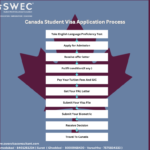
Step-by-step Canada Study Permit Application Process (2026)
The process is straightforward if you follow the order. Skip a step, and you risk delays or rejections.
Step 1: Get your offer letter from a public DLI
Your institution must be a Designated Learning Institution (DLI). Private colleges do not count. Get the official offer letter in writing, with tuition amounts and start dates clearly stated.
Step 2: Confirm your program’s PGWP eligibility — check the CIP code
Ask your institution for the 6-digit CIP code. Match it against IRCC’s eligible fields list. If your field is not there, do not proceed. A wrong program choice now costs you later.
Step 3: Get your PAL from your province if required
If you are applying for an undergraduate or diploma program, your province may require a Provincial Attestation Letter (PAL). Master’s and PhD students at public institutions are exempt from January 2026. Check your province’s requirements and apply early. PAL delays are real.
Step 4: Prepare financial proof — GIC plus bank statements
Open a GIC with a Canadian bank, gather your bank statements from the last six months, collect scholarship or loan documents, and compile everything into one clear folder. Organize chronologically.
Step 5: Write your SOP (Statement of Purpose)
This is your story. Explain why you chose this program, how it fits your goals, and why you will return home after graduation. One page, honest, no generic template language. Your SOP is often the difference between approval and refusal.
Step 6: Submit your online application on the IRCC portal
Apply for a Canada study permit through the official IRCC website. Upload all documents clearly labeled. Do not send originals by mail unless IRCC requests them.
Step 7: Complete biometrics within 14 days of receiving the BIL
Once IRCC receives your application, they send a Biometric Instruction Letter (BIL). You have 14 days to complete fingerprints and photos at a Canadian visa application center. Missing this deadline can reject your file.
Step 8: Wait for a decision and track via the IRCC portal
Standard processing takes 4 to 8 weeks. You can check your file status anytime in the online portal. Do not call IRCC before 30 days have passed.
Note for PhD applicants: Starting January 2026, PhD students at public institutions may receive 14-day fast-track processing. However, this is not guaranteed for all applicants. Always check current IRCC timelines before making travel plans based on this timeline.
Common Mistakes Indian Students Make In 2026 — And How To Avoid Them
Most bad outcomes start before the visa file is even submitted. We have seen the patterns repeat. Here is how to avoid them.
Mistake 1: Applying to a private college assuming it qualifies for PGWP
Private colleges are not eligible for PGWP, even if they advertise it. A diploma from a private institution will not lead to a work permit. Verify DLI status first, always.
Mistake 2: Choosing a business diploma that is no longer PGWP eligible
Business diplomas at the college level fell off the eligible list years ago. But students still enrol thinking the degree itself guarantees PGWP eligibility. It does not. Check the exact CIP code before paying.
Mistake 3: Weak or mismatched financial documents
Money appears suddenly. Sponsor income is unclear. Bank statements show activity that does not match your SOP. Officers see these patterns constantly. Clean, consistent financials are non-negotiable.
Mistake 4: Letting IELTS or PTE scores expire before applying for PGWP
A student gets approved for a study permit with an IELTS score from two years ago. Then, at graduation, they apply for PGWP. The old score is no longer valid. They cannot get the work permit without a current language test. They retake IELTS, wait weeks, and delay their job search by months.
Mistake 5: Applying to Ontario without checking PAL availability first
Ontario has high demand and limited PAL spots. Thousands of students apply. Many get rejected because the province hit its cap. Apply to Ontario only if you have checked current PAL allocations with a consultant.
Mistake 6: Not verifying the DLI’s public status before paying fees
You enrol at what you think is a public college. Midway through your program, you discover it is private. No PGWP. All that tuition is now a sunk cost.
Mistake 7: Applying without an SOP or with a generic SOP not tailored to your program
Copy-paste SOPs are obvious. Officers read hundreds per week. A generic SOP signals low effort or dishonesty. Your SOP should explain why this specific program, at this specific institution, for your specific goals, Personalization matters.
We have seen many students panic about the new rules. Most of the time, once they understand the details and avoid these traps, they feel much more confident. That is why early planning with a Canada student visa consultant is worth the investment.
Why Work With A Canada Student Visa Consultant In 2026?
With 49% fewer study permits available than 2024 peaks, one mistake costs real time and money. That is not an exaggeration. It is math.
A student chooses the wrong program. They get approved for a study permit. They move to Canada, enrol, graduate. Then they discover the program is not PGWP eligible. No work permit. No Canadian work experience. No Express Entry points. An entire year of tuition and living costs becomes a dead end.
This happens every year. It is preventable.
What a Real Consultant Does (vs. Just Filing Forms)
A study permit agent can fill out forms. A Canada student visa consultant does something different.
We verify program eligibility before fees are paid. We check PAL availability in your target province and advise on timing. We map your PGWP pathway so you know exactly what work rights you will have after graduation. We review your SOP, your financial documents, and your overall file strength before submission. We do not just process paperwork. We protect your investment.
In a tighter year, that difference compounds. A consultant who catches a PGWP eligibility issue before you enrol saves you an entire year of wasted tuition fees. A consultant who spots a financial inconsistency lets you fix it instead of facing refusal.
SWEC’s Track Record
At SWEC, we bring 20 years of experience, 10,000 plus visas processed, and 30 plus expert counsellors who have guided Indian students through every Canadian visa change. We have seen rule shifts come and go. We know what works and what does not.
We often catch PGWP eligibility issues before a student even applies, saving them an entire year of wasted tuition fees. That is not a sales line. It is something we do regularly because we ask the right questions upfront.
Our counsellors are based in Gujarat—Surat and Ahmedabad—and we understand the specific concerns of students and families from this region. We speak your language. We know the colleges you are considering. We have guided thousands of students from here through approval and onward to Canada.
When a Consultant Becomes Essential
You should work with a consultant if:
- You are unsure whether your program leads to PGWP eligibility
- You are applying to a high-demand province and need PAL timing advice
- Your financial situation is complex (multiple sponsors, education loans, recent large transfers)
- You want your SOP reviewed by someone who has read thousands of them
- You need someone to answer questions at 2 AM when stress hits
- You want to move forward with confidence, not guesswork
If any of these apply, a consultant is not a luxury. It is insurance.
Ready to move forward with a plan you trust? Our Canada student visa service team is here to help. We offer a free initial consultation to understand your situation, answer your questions, and show you exactly what we can do.
FAQs Indian Students Ask Us About Canada Student Visa 2026
Does SWEC help with the PAL application process for Canada?
Yes. SWEC guides you through your province’s specific PAL process, confirms your DLI qualifies, and ensures your application is submitted correctly. Our counsellors have helped hundreds of students through the PAL system since it was introduced.
How much does it cost to apply for a Canada student visa in 2026?
The IRCC study permit application fee is CAD 150. You will also need a biometric fee of CAD 85. A GIC of at least CAD 10,000 is required as financial proof. SWEC helps you understand all costs upfront with no hidden charges.
Is my course PGWP-eligible? How do I check?
Every program has a 6-digit CIP code. This code must appear on IRCC’s approved list at the time you apply for your study permit. SWEC verifies this for every student before they enrol — a step many students skip and regret later.
Can a spouse come with the student on Canada student visa?
If you are a Master’s student of 16 months or longer, or a PhD student, your spouse may be eligible for an open work permit. For undergraduate and diploma students, spousal open work permits were restricted. SWEC helps you explore the right pathway for your family situation.
How long can processing take?
Standard processing takes 4 to 8 weeks for most applicants. PhD students now benefit from 14-day fast-track processing from January 2026. Submitting a complete application with all documents ready is the single biggest factor in reducing your wait time.
Conclusion
Canada is still the strongest destination for Indian students who choose the right program and plan early. The 2026 rules are tighter, yes, but they are manageable. Thousands of students will get approved this year. The difference between those who succeed smoothly and those who face delays or rejections often comes down to one thing: starting early and getting guidance from someone who has been through this before.
A Canada student visa consultant who understands both the official rules and the real-world timing can save you months of stress and potentially thousands of rupees in mistakes. The three moves that matter most remain unchanged: choose a public DLI, confirm PGWP eligibility before paying fees, and start the PAL process early if your program requires it.
If you are serious about Canada in 2026, do not navigate this alone. The 2026 rules can feel complicated. But with the right guidance, they are very manageable. At SWEC, our Canada visa team has helped thousands of students from Gujarat and across India get their study permits approved, even in competitive years like this one. We catch issues early. We plan provincial timing carefully. We review every document before submission.
Do not risk your application. Get it right the first time.
Schedule Your Free Canada Visa Consultation with our team today. We will answer your specific questions, review your situation, and show you exactly what a solid plan looks like for 2026.