
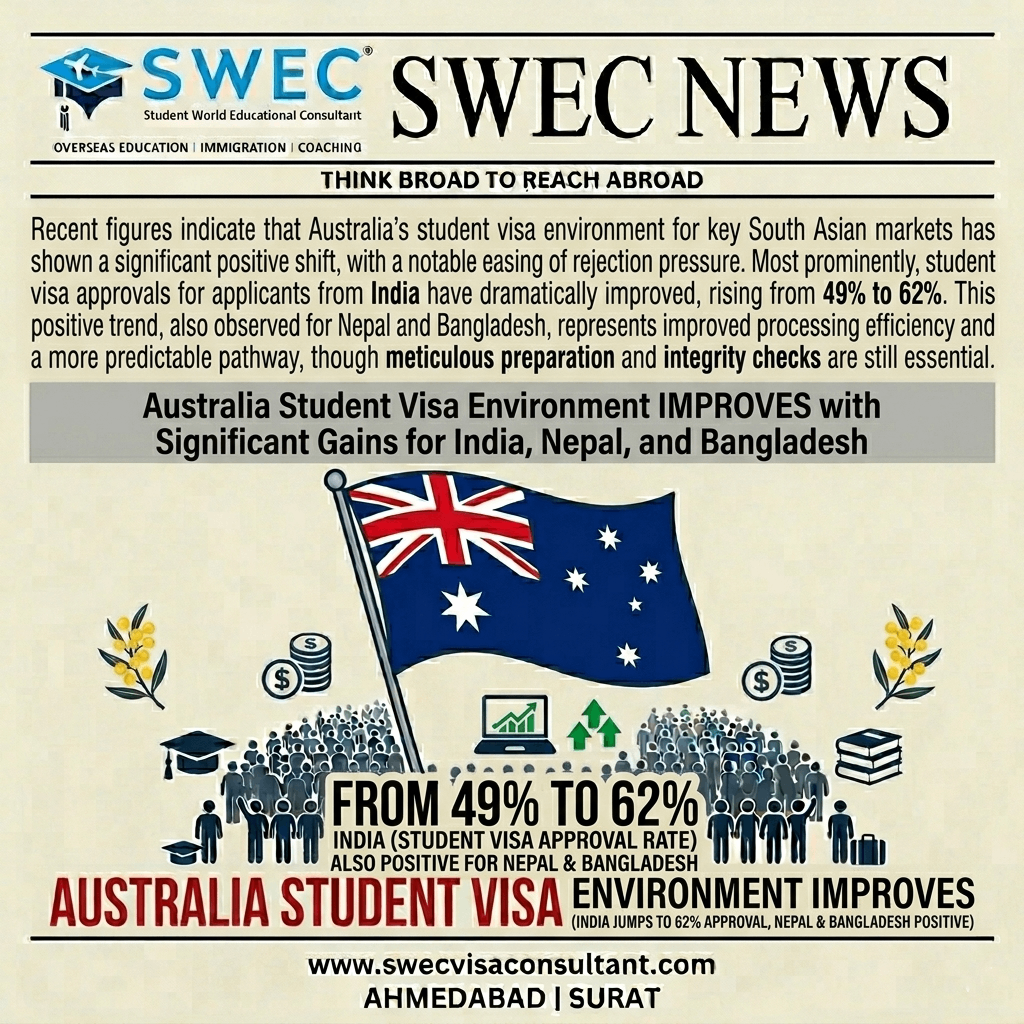
Approval rates for offshore higher education visas rebound in April 2026, but slower processing of South Asian applications suggests caution for Indian students planning to study in Australia
Australia’s student visa approval rates improved in April 2026 after reaching record lows in the previous two months, according to Department of Home Affairs data reported by Times Higher Education and VnExpress.
The latest update offers some relief for Indian students following the Australia student visa process.
But the rebound may not signal a full policy shift.
The data suggests the rise in approvals was partly tied to slower processing of applications from South Asia, including India, Nepal, Bangladesh and Sri Lanka.
In April, 83% of offshore higher education visa applications processed in Australia were granted.
That was up from 59% in March and 67% in February.
The increase is significant, especially after months of concern over rising refusals.
Still, the total number of applications processed in April fell by nearly 3,000 compared with the previous month.
That means the higher approval rate may reflect reduced processing of higher-risk applications rather than a broad easing of scrutiny.
Indian Approval Rate Improves to 62%
For Indian students, the latest figures show a clear improvement.
The approval rate for Indian offshore higher education applications rose from 49% to 62% in April.
That is a strong recovery compared with the very low results seen earlier in the year.
At the same time, India remains one of the countries under closer review in Australia’s evidence-level system.
That system places applicants from certain countries under heavier scrutiny when it comes to financial proof, course choice, and genuine student intent.
The latest numbers therefore offer hope, but not certainty.
Students planning to apply for a study in Australia 2026 intake should still expect detailed checks on their files.
South Asian processing volumes fall sharply
One of the most important details in the April data is the drop in processing volume.
The number of Indian applications processed in April was 59% lower than the average monthly volume in February and March.
Processing also fell sharply for nearby South Asian countries.
The reported decline was:
- 67% for Bangladesh
- 78% for Nepal
- 87% for Sri Lanka
These drops matter because lower processing numbers can push approval rates higher, even if the overall visa assessment approach has not changed much.
That is why migration watchers are treating the rebound cautiously.
The data shows improvement, but not necessarily a full return to earlier grant patterns.
Why the Update Matters for Indian Students
Australia remains one of the top destinations for Indian students.
It offers strong universities, a wide range of courses, and post-study pathways that continue to attract applicants from across India.
But the recent visa cycle has been tougher than many students expected.
Refusal rates rose when Australia increased scrutiny on student visa files from higher-risk source countries.
That led to more concerns about visa credibility, financial documents, and whether applicants were genuinely coming to study.
For many families, this created uncertainty around the visa rejection rate India students were facing.
The April rebound is encouraging, but students should avoid reading it as a green light.
A stronger approval rate does not mean weak files will now be accepted.
What is Driving Australia’s Stricter Visa Checks?
Australia has been using a risk-based approach to review student visa applications.
Countries such as India, Nepal and Bangladesh have faced more attention because of concerns around misuse of the student visa stream in the past.
That means visa officers often look more closely at:
- Academic history
- Course relevance
- Financial capacity
- English language ability
- Study purpose
- Return intent after graduation
If an application looks unclear or inconsistent in any of these areas, refusal risk rises.
This is why the current improvement should be seen as only one part of the picture.
A better approval rate can help, but preparation still matters more than ever.
What Students Should Do Now
Students planning to apply should focus on building a complete and consistent visa file.
That means choosing the right course, showing a logical study path, and preparing financial documents carefully.
They should also avoid submitting rushed applications.
Even in a period of improving approval rates, weak documentation can still lead to refusal.
For Indian applicants, the safest approach is to treat every step seriously, from university selection to statement writing and supporting evidence.
If you are planning to study in Australia 2026, early preparation can make a major difference.
Visa Trend may help University Demand
The improvement in approval rates could also help restore confidence among students and education agents.
Universities in Australia have seen pressure in recent months as some South Asian markets slowed due to stricter visa conditions.
A rebound in approvals may encourage more students to move forward with applications, especially those who delayed filing because of concern over refusals.
However, the trend still depends on future processing volumes.
If applications from higher-risk countries continue to be handled slowly, approval rates may remain artificially high even if the underlying system stays strict.
That is why the coming months will be important for understanding whether this is a real recovery or just a short-term shift.
A cautious but positive sign
For now, the April data gives Indian students a reason for cautious optimism.
The Australia student visa picture is better than it was in March.
Approval rates have improved.
The Indian approval rate has also moved up.
But the system remains selective, and South Asian applicants are still being reviewed carefully.
Students should take the latest trend as a positive signal, not a guarantee.
Those planning to apply should make sure their documents are accurate, complete and aligned with their study goals.
SWEC Visa Consultant continues to support Indian students who need help with Australian visa planning, application review and documentation guidance.
Students can explore dedicated assistance through the Australia Student Visa Consultants or connect directly through the contact swec.
As Australia’s visa environment continues to shift, expert guidance may help students avoid common mistakes and submit stronger applications.
For Indian students aiming to build a future in Australia, the latest update is encouraging.
But careful preparation still remains the key to success.