IRCC Reports Notable Improvements in Processing Times for Work and Study Permits in May 2026
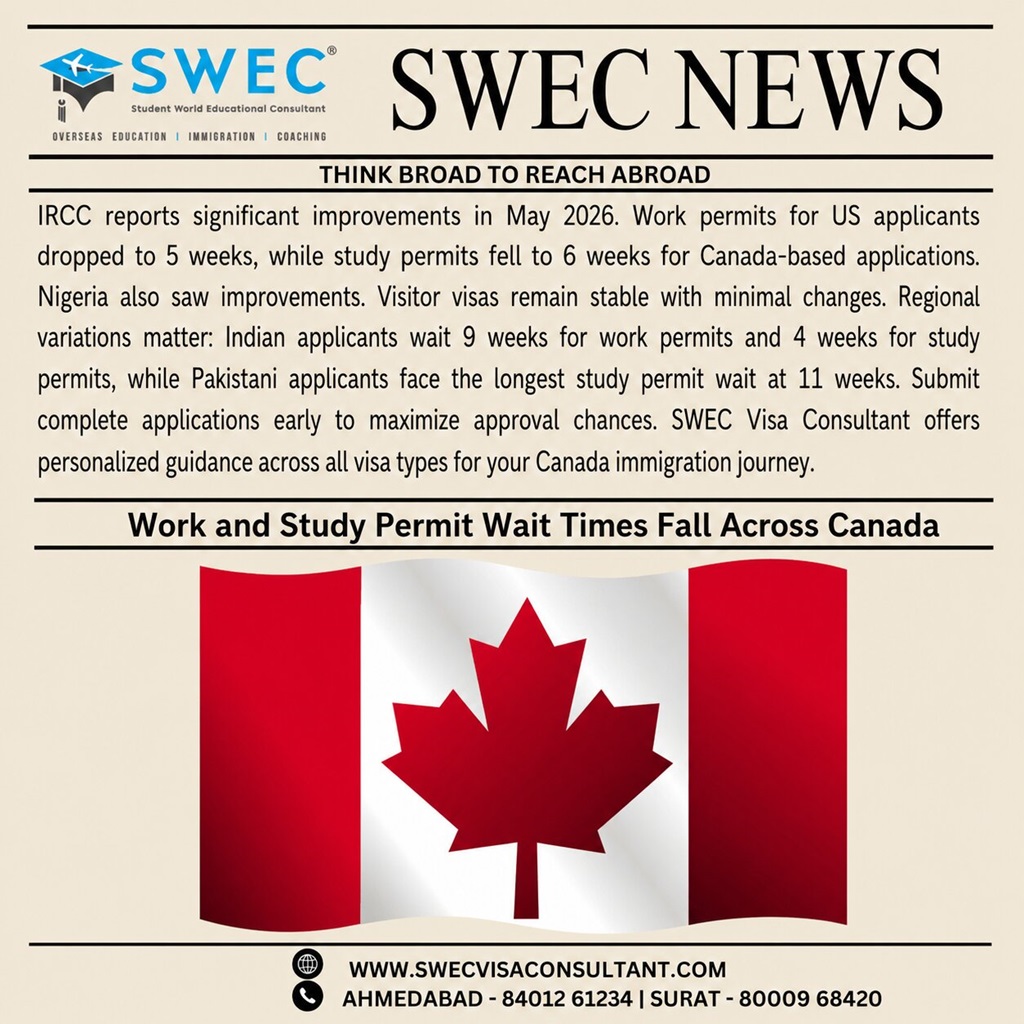
Good news for international professionals and students targeting Canada. Immigration, Refugees and Citizenship Canada (IRCC) has released updated processing times showing significant improvements across work and study permit applications. The latest data shows declining wait times for several countries, particularly benefiting applicants from the United States and Canada-based applicants.
Work Permit Processing Times Get Shorter
The most encouraging updates come from the work permit category. Applicants from Nigeria and the United States have seen their processing times drop by one week, bringing US-based applications down to just 5 weeks. This marks real progress for skilled workers planning to move to Canada for employment opportunities.
Here’s the current breakdown for work permits:
| Applying From | Current Processing | Processing Time As Of 29 April 2026 |
| Canada | 212 Days | 217 Days |
| India | 9 Weeks | 9 Weeks |
| Nigeria | 6 Weeks | 7 Weeks |
| United States | 5 Weeks | 6 Weeks |
| Pakistan | 8 Weeks | 8 Weeks |
| Philippines | 8 Weeks | 7 Weeks |
The service standard for outside-Canada work permit submissions is 60 days, though in-Canada applications aim for 120 days. Current processing times for most countries now align closer to these benchmarks, providing hope for faster approvals.
Study Permit Wait Times Drop Significantly
Study permit applicants are seeing even better news. Canada-based study permit applications dropped by a substantial two weeks, now sitting at just 6 weeks. US-based study permit applicants also saw a one-week decrease, bringing their processing time to 5 weeks.
Current study permit processing times by country:
| Applying From | Current Processing Time | Processing Time As of 29 April 2026 |
| Canada | 6 Weeks | 8 Weeks |
| India | 4 Weeks | 4 Weeks |
| United States | 5 Weeks | 6 Weeks |
| Nigeria | 5 Weeks | 5 Weeks |
| Pakistan | 11 Weeks | 9 Weeks |
| Philippines | 5 Weeks | 4 Weeks |
The service standard for study permits outside Canada is 60 days, and many countries are already meeting or approaching this target. For applicants already in Canada, the service standard is 120 days for initial and extension applications.
Visitor Visa Processing Times Remain Stable
IRCC data shows minor changes, with most countries maintaining consistent processing speeds. While work and study permits have seen significant improvements, visitor visa processing tells a different story. The latest IRCC data reveals that visitor visa wait times have either stayed the same or increased modestly across featured countries. Most increases are minimal, typically no more than two days.
Here’s how visitor visa processing times break down by country:
| Applying From | Current Processing Time | Processing Time As Of 29 April 2026 |
| Canada | 11 Days | 11 Days |
| India | 27 Days | 27 Days |
| United States | 22 Days | 22 Days |
| Philippines | 18 Days | 17 Days |
| Nigeria | 47 Days | 45 Days |
| Pakistan | 50 Days | 48 Days |
The service standard for visitor visa submissions outside Canada is 14 days. Notably, only US-based and Philippines-based applicants are currently meeting or approaching this target.
What These Changes Mean For You
The recent improvements in processing times offer several key takeaways for aspiring Canadian immigrants and visitors.
Faster Approvals on the Horizon for Work Permits
Work permit applicants from the United States and Nigeria can now expect quicker decisions. With US processing times at just 5 weeks, American professionals should plan their moves accordingly. Similarly, Nigerian professionals will benefit from the one-week reduction. This acceleration opens doors for skilled workers who want to transition to Canadian employment faster than before.
The improvement is particularly significant for workers in high-demand fields. Whether you’re in technology, healthcare, skilled trades, or other sectors, a shorter processing timeline means you can secure your position and arrange relocation sooner. Planning your move in advance of submitting your application allows you to take advantage of these faster approvals.
Study Permits Are Moving Faster
Students planning to study in Canada face shorter wait times, especially those applying from within Canada or the United States. The two-week drop for Canada-based study permits is particularly significant for students already in the country considering extensions or new permits.
For international students, this development is crucial. If you’re planning to enroll in a Canadian institution for the upcoming academic year, faster study permit processing means you have a better chance of getting approved before classes start. US-based students benefit from just a 5-week timeline, while students in India can expect approval in just 4 weeks. This acceleration allows you to finalize your study plans with greater confidence.
Visitor Visas Offer Stability and Predictability
While work and study permits have improved significantly, visitor visas show a different pattern. Processing times have remained stable or increased only minimally. This stability is actually valuable information for people planning to visit Canada.
If you’re considering a trip to Canada for tourism, business meetings, or family visits, the consistent processing times mean you can plan with confidence. Canada-based visitors get approval in just 11 days, while US-based applicants typically wait 22 days. These timelines are predictable and allow you to book your flights and accommodations with certainty.
However, applicants from South Asia and Africa face longer waits. If you’re applying from India, expect 27 days. Pakistani applicants should prepare for 50 days, while Nigerian applicants may wait up to 47 days. These longer timelines require advance planning. Submit your visitor visa application at least two months before your intended travel date to account for processing time and any potential delays.
Regional Variations Matter Across All Visa Types
Processing times vary significantly by country of residence. If you’re applying from India, processing typically takes 9 weeks for work permits, 4 weeks for study permits, and 27 days for visitor visas. Pakistan-based applicants should prepare for longer wait times across all categories, particularly for study permits (11 weeks) and visitor visas (50 days).
Filipino applicants have seen slight increases across work and study permits, suggesting a potential shift in processing capacity for this region. Nigerian applicants enjoy some of the fastest work permit processing at 6 weeks but face extended visitor visa timelines at 47 days.
Understanding where your country falls in IRCC’s processing queue helps you plan realistic timelines for your application.
Processing Times vs. Service Standards
It’s important to understand the difference between processing times and service standards. Processing times show what applicants can realistically expect to wait. Service standards are the targets IRCC aims to meet. For work and study permits outside Canada, IRCC’s service standard is 60 days.
Most countries are either meeting or approaching these targets now, suggesting IRCC is working more efficiently than in previous months. For visitor visas, the 14-day service standard is more challenging to meet. Only US and Philippines applicants are close to this target, highlighting how visitor visa processing lags behind the ambitious standard.
Plan Ahead For Stronger Chances
If you’re considering a work, study, or visitor permit for Canada, these updated processing times present an opportunity to plan strategically. Here’s what to consider:
Submit Complete Applications: Incomplete submissions can delay processing significantly. Ensure all required documents are included from the start. Missing documents mean your application gets returned, adding weeks to your timeline.
Choose Your Application Stream Wisely: Some countries face shorter processing times than others. If you have multiple visa options, consider your country of residence carefully when planning your move to Canada.
Prepare Documentation Early: Even though wait times are falling, thorough preparation of your documents ensures smooth processing once you submit. Start gathering your paperwork months in advance.
Consider Timing: With study permit processing at just 5-6 weeks in many countries, international students can plan their moves more confidently. The same applies to work permit applicants. Visitor visa applicants should submit at least 6-8 weeks before their intended travel date.
Looking Forward
The latest IRCC updates suggest that processing times are becoming more predictable and, in many cases, faster. This is good news for anyone targeting work or study opportunities in Canada. Whether you’re a skilled professional seeking employment, a student planning to pursue education, or a visitor wanting to explore Canada, the updated processing times mean you can move forward with greater confidence in your timelines.
The Canadian immigration system continues to evolve. Staying updated on processing times helps you plan more effectively and submit applications when conditions are most favorable.
For personalized guidance on your specific situation and eligibility across work permits, study permits, or visitor visas, SWEC Visa Consultant is here to help navigate Canada’s immigration requirements and maximize your chances of approval.