Introduction
Getting a study permit approved feels like the finish line. It isn’t. Once your permit is in hand, a second set of decisions starts: how you’ll pay tuition, cover rent, and manage everyday money once you land in Canada. Banking is easy to overlook while you’re focused on visa paperwork, but it directly affects your first few weeks in the country.
Every year, thousands of Indian and other international students arrive in Canada without knowing which documents a bank will ask for, how Canadian credit works, or which fees quietly eat into their budget. This guide walks through the practical side of Canadian banking for 2026, from choosing an account before you leave home to avoiding common scams once you’re settled. It’s written for planning purposes only. For your specific financial or immigration situation, speak with a licensed financial institution, or talk to a SWEC visa consultant about how your finances fit into your overall study plan.
What International Students Should Know About Banking in Canada
Canada’s banking system is dominated by a handful of large, federally regulated banks (often called the “Big Five”: RBC, TD, Scotiabank, CIBC, and BMO), along with credit unions and smaller institutions. Most offer accounts designed specifically for international students, usually with no monthly fee while you’re enrolled full-time.
The Financial Consumer Agency of Canada regulates how federally chartered banks treat consumers, including disclosure of fees and complaint handling. That’s a useful resource if you ever have a dispute with a bank later.
One thing to understand early: Canadian banks don’t automatically know anything about you. There’s no shared international banking history. Your first Canadian account is, in a sense, a fresh start, and how you use it in the first year shapes what financial products become available to you later, including credit cards and loans.
Can International Students Open a Bank Account in Canada?
Yes. International students with a valid study permit can open a personal bank account at any major Canadian bank or credit union. You generally don’t need a Social Insurance Number (SIN) to open a basic account, though a SIN is required later for paid campus jobs, tax filing, and some credit products.
Most banks let you start the process before you leave home. Several major banks offer a pre-arrival or “newcomer” account application that you can complete online from India (or elsewhere) and finish by visiting a branch after you arrive, sometimes without an initial deposit. Confirm current pre-arrival options directly with the bank, since program details and offers change.
Documents You May Need to Open a Bank Account
Requirements vary slightly by bank, but a typical set includes:
- Passport (valid, government-issued photo ID)
- Study permit or, in some cases, your port-of-entry letter of introduction
- Proof of enrollment, such as your letter of acceptance, a school-issued enrollment letter, a student ID, or a course timetable
- A Canadian address, even a temporary one like a hotel or homestay address; some banks let you provide this later
- SIN, if you already have one (not usually mandatory for a basic account)
Bring physical and digital copies of each document. Some branches scan documents on the spot; others ask you to bring originals in person. Because requirements differ between banks, and even between branches of the same bank, check directly with your chosen bank before your appointment.
Chequing vs. Savings Accounts: What’s the Difference?
This is one of the most common points of confusion for newcomers.
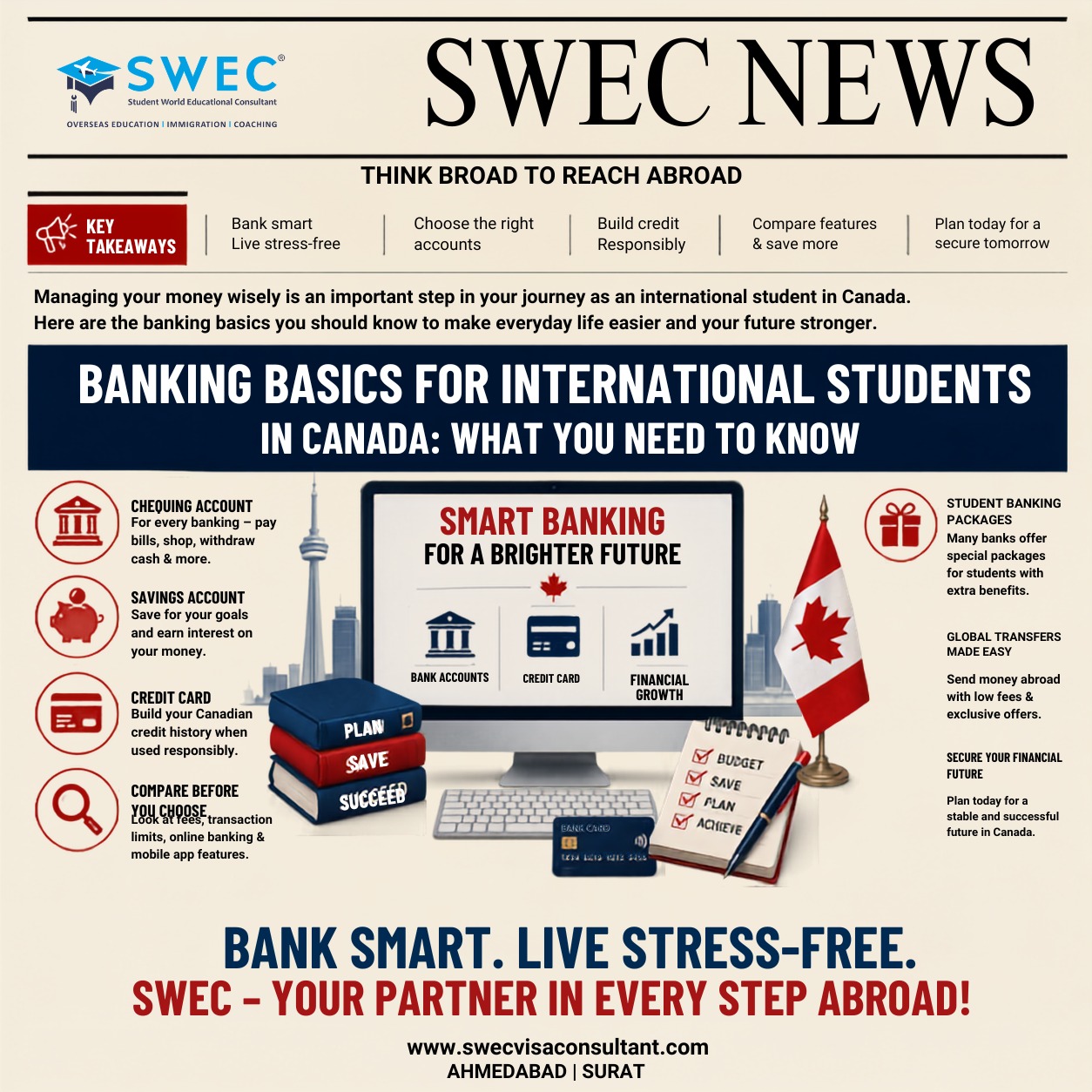
Chequing accounts are built for frequent, everyday transactions: debit card purchases, bill payments, Interac e-Transfers, rent payments, and withdrawals. Most student accounts are chequing accounts, and many come with no monthly fee and unlimited transactions while you’re a full-time student.
Savings accounts are meant to hold money you’re not spending right away. They usually pay a small amount of interest and may limit how many free withdrawals or transactions you can make per month before fees apply.
A common setup for students is a no-fee chequing account for daily spending, paired with a savings account for money you want to keep aside, such as an emergency fund or funds for next term’s rent.
Should International Students Get a Canadian Debit Card?
Yes, in almost all cases. A debit card is issued with your chequing account and lets you pay directly from your account using Interac, Canada’s domestic debit network, both in stores and online (where “Interac Online” or a linked Visa Debit/Debit Mastercard is supported). It also lets you withdraw cash and send Interac e-Transfers, the standard way Canadians split rent, pay a landlord, or repay a friend.
Using your debit card sensibly (paying rent on time, keeping records, avoiding overdraft) doesn’t build your credit score, since debit activity generally isn’t reported to credit bureaus. But it does build a track record with your bank, which some institutions consider when you later apply for a credit card or loan.
Credit Cards and Building a Credit History in Canada
This is where many international students get caught off guard. Credit history from India, or any other country, does not carry over to Canada. Canada’s two credit bureaus, Equifax Canada and TransUnion Canada, only track activity that happens within Canada. Every international student starts at zero.
That matters because a Canadian credit score affects more than credit card approval. Landlords, cell phone providers, and even some employers may check it later. It also matters if you’re planning ahead: many students who study in Canada go on to explore staying in Canada after graduation on a post-graduation work permit, and a clean credit history built during your studies makes that transition smoother.
Two common starting points:
- Secured credit cards: You put down a deposit (commonly starting around $500, though minimums vary by issuer), which typically becomes your credit limit. These are widely available to newcomers with no Canadian credit history.
- Newcomer or student credit cards: Several major banks (RBC, CIBC, BMO, and others) offer unsecured credit cards to newcomers and international students without requiring existing Canadian credit history, though approved limits and eligibility rules vary by bank and change over time. Confirm current limits, fees, and eligibility directly with each bank rather than relying on advertised figures, since these offers are updated regularly.
Whichever card you choose, the habits that build credit are the same everywhere: pay your full statement balance every month, keep your balance well below your limit, and never miss a payment date. Missing payments can hurt your credit score quickly and take a long time to repair.
Banking Fees International Students Should Check
Even “free” student accounts can carry hidden costs if you’re not careful. Before choosing an account, check:
- Monthly account fees and whether the no-fee status is guaranteed for the length of your program or only for a set number of years
- Non-sufficient funds (NSF) fees, charged if a payment bounces due to low balance; these are typically in the $45+ range and vary by bank
- Overdraft fees or interest, if your account has overdraft protection
- ATM fees for using a machine outside your bank’s network, both in Canada and abroad
- Interac e-Transfer fees, which some standard accounts still charge per transfer
- Foreign transaction fees, if you use your Canadian debit or credit card outside Canada, or receive money from abroad
- Wire transfer / incoming fees, charged by some banks when you receive an international wire, such as a GIC (Guaranteed Investment Certificate) transfer used for your study permit application
Ask for the account’s official fee schedule in writing (most banks publish this on their website) rather than relying only on a branch staff summary.
Sending Money From India (or Your Home Country) to Canada
Students typically need to move money for three different purposes: the GIC investment used for a study permit application, first-year tuition, and ongoing living expenses. Each has different cost and speed tradeoffs.
- Bank wire transfer (SWIFT): Widely accepted by universities and Canadian banks for tuition, but usually the most expensive option once you add the sending bank’s fee, the exchange rate markup, and the Canadian bank’s incoming wire fee. It can also take several business days.
- Digital transfer services (such as Wise or other regulated money transfer providers): Often cheaper for smaller, regular transfers like rent or monthly spending money, since they tend to use exchange rates closer to the mid-market rate with clearer, published fees. Not all providers are accepted for tuition payments, so check with your school first.
- Bank-to-bank transfers within India, followed by an international transfer: Common when parents are sending funds, but exchange rate margins can vary a lot between providers, so compare the total cost (fee plus exchange rate), not just the advertised fee.
Before choosing a method, always compare the total cost: transfer fee, exchange rate margin, and any receiving fee on the Canadian side. A “free transfer” with a poor exchange rate can cost more than a transfer with a visible fee and a fair rate. Confirm current rates and fees directly on the provider’s website before sending money, since they change frequently.
Managing Tuition, Rent, and Everyday Student Expenses
A simple way to think about your Canadian budget is in three layers:
- Fixed costs: tuition (usually paid per term or per year), rent, and utilities if not included
- Semi-regular costs: groceries, transit passes, phone plan, textbooks
- Flexible spending: eating out, entertainment, travel
Set up automatic bill payments where possible so rent and phone bills are never missed, since a missed rent payment can affect your relationship with your landlord and, indirectly, your reference for future rentals. Keep a small buffer in your chequing account (many advisors suggest one to two months of living expenses) so a delayed transfer from home doesn’t leave you short.
If your program is longer than a year, remember that the government’s proof-of-funds requirement, detailed on IRCC’s official financial support page, only covers your first year. Plan realistically for tuition increases and rising living costs in later years, and keep evidence of how you intend to fund your remaining studies, since this may be reviewed at different points in your immigration journey.
Banking Before You Arrive in Canada
- Research two or three banks and compare their international student account terms, not just the marketing page
- Check whether the bank allows you to start an application from India and complete it in person after arrival
- Confirm which documents you’ll need to bring to the branch appointment
- If you’re using a GIC as part of your proof of funds, confirm the current GIC provider terms, minimum amount, and how funds are released to you after arrival, directly with the institution and current IRCC guidance
- Keep both digital and printed copies of your acceptance letter and study permit approval, along with your financial documents; you’ll need them more than once
If you’re still finalizing your study permit or GIC paperwork, it’s worth sorting that out before you focus on bank comparisons. Contact a SWEC visa consultant in Ahmedabad or Surat if you want a second opinion on your documents before you submit anything.
What to Do During Your First Month in Canada
- Visit a bank branch (or complete your pre-arrival application) as soon as possible after arrival, ideally within your first one to two weeks
- Apply for a Social Insurance Number (SIN) if you plan to work, since you’ll need it for payroll and taxes
- Set up online and mobile banking, and enable transaction alerts
- Add your rent, tuition due dates, and phone bill as calendar reminders tied to your account
- Ask your bank directly about credit card eligibility once your account has some activity history
- Keep a small amount of Canadian cash on hand for the first few days, since not every small vendor accepts cards, but move most of your funds into your bank account promptly for safety and tracking
Common Banking Mistakes International Students Should Avoid
- Ignoring the fee schedule and assuming “student account” always means “completely free forever”
- Carrying large amounts of cash instead of moving funds into a bank account soon after arrival
- Applying for multiple credit cards at once, which can affect your credit application history unnecessarily
- Missing a single payment early on, thinking it won’t matter; even one missed payment can affect a new credit file
- Not asking what happens to fees after graduation or after your student status changes, since “no monthly fee” is often tied to full-time enrollment
- Sending money through unofficial or unregulated channels to save a small fee, which increases fraud risk
Banking Scams and Fraud: What Students Should Watch For
International students and newcomers are frequently targeted by scams because they’re less familiar with how Canadian institutions actually communicate. IRCC’s page on protecting newcomers from fraud and the Canadian Anti-Fraud Centre both publish warnings aimed specifically at people new to Canada. Recurring warning signs include:
- Callers or emails claiming to be from your bank, IRCC, or the CRA, asking you to “confirm” your PIN, password, or full card number; legitimate institutions do not ask for this information this way
- Pressure to act immediately, such as threats that your account will be frozen or you’ll be deported if you don’t pay right away
- Requests to pay a debt or fee using gift cards, prepaid cards, or wire transfers to a personal account
- Requests to share a one-time verification code sent by text or email; never share these codes, even with someone claiming to be bank staff
- Emails from free personal accounts (like Gmail or Hotmail) claiming to be from IRCC or a government department
- Look-alike websites with URLs that are almost, but not exactly, correct
If you’re ever unsure whether a call or message is genuine, hang up and call your bank back using the number printed on your card or on the bank’s official website, not a number given to you by the caller. IRCC also notes that newcomers should never share identifiers like their UCI or file number over the phone or by email.
How to Choose a Canadian Bank Account: Questions Worth Asking
Before settling on a bank, it helps to ask directly:
- Is this account genuinely no-fee for the length of my program, or only for a limited number of years?
- What happens to the account terms after I graduate or if my study permit status changes?
- Are Interac e-Transfers free, and is there a transfer limit?
- What’s the process, timeline, and fee for receiving an international wire transfer (relevant if you’re using a GIC or receiving tuition funds from home)?
- Does the bank offer a newcomer or student credit card, and what are the current eligibility requirements?
- Is there a nearby branch, and what are the customer service hours and language support options?
Comparing two or three banks against these questions, rather than choosing based on a single promotional offer, tends to lead to a better long-term fit.
Frequently Asked Questions
Do I need a Social Insurance Number (SIN) to open a bank account in Canada?
No. Most banks let you open a basic account with your passport, study permit, and proof of enrollment. A SIN becomes necessary once you start paid work in Canada or need to file taxes.
Can I open a Canadian bank account before I leave India?
Several major banks offer a pre-arrival application you can start online, then finish in person after you land. Confirm the current process and any required initial deposit directly with the bank, since offers change.
Will my credit history from India transfer to Canada?
No. Canadian credit bureaus (Equifax Canada and TransUnion Canada) only track credit activity within Canada. Every international student starts with no Canadian credit history, regardless of their credit record elsewhere.
What’s the safest way to send tuition money from India to Canada?
There’s no single “safest for everyone” answer, but a bank wire is widely accepted by universities and is a regulated, traceable method, though usually the most expensive once fees and exchange rate markup are included. Compare the total cost of a bank wire against regulated digital transfer providers, and confirm your school accepts your chosen method before sending funds.
How much money do I need to prove for a Canadian study permit?
IRCC sets a minimum living-expenses amount that is reviewed and updated periodically, separate from tuition and travel costs. Because this figure changes, always confirm the current amount directly on the official IRCC proof-of-financial-support page before applying.
Can international students get a credit card in Canada without a Canadian credit history?
Yes. Secured credit cards and several bank-specific newcomer credit card programs are designed for people with no Canadian credit history. Terms, deposit amounts, and credit limits vary by bank and change over time, so check current details directly with each institution.
What should I do if I think I’ve received a banking scam call or email?
Don’t respond with any personal or account information. Hang up or don’t click any links, then contact your bank directly using the number on your card or their official website to verify.